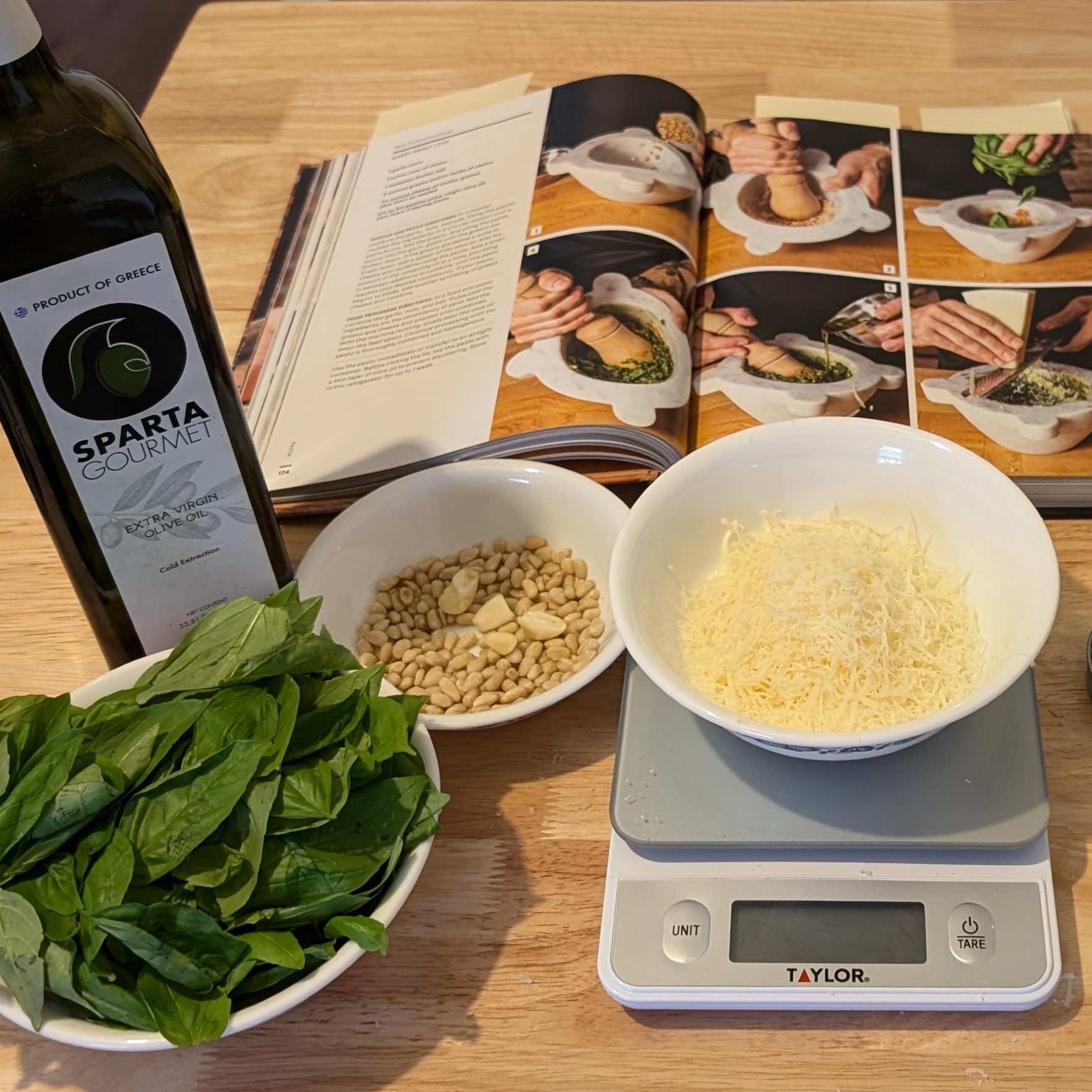
Gather around, kids. It’s time for auntie corner.
When I started cooking a long time ago, I side-eyed the idea of owning a kitchen scale even though every chef I liked watching and every issue of Cook’s Illustrated recommended it. Even though I was watching episodes of Good Eats like they were The X-Files, that level of commitment to the craft of cooking was beyond me.
It felt like taking an extra step to do what a measuring cup already does. Why would I do that? It felt pretentious and unnecessary for someone who was just baking a lot of cupcakes and making cheeseburger pie.
Finally, a few years ago, I bought this scale on sale somewhere. I started to use it as I tried more and more ambitious recipes, but what sold me on measuring by weight whenever possible was the potato bread recipe from Preppy Kitchen. As I’ve made more and more of his recipes, I’ve noticed that he always puts a note in to weigh the flour, and since my struggle with bread failure is well-documented, I thought I’d give it a go with the full recipe rather than just one ingredient, because even my first failed attempt at bread involved weighing the ingredients, but only a couple of them instead of all of them.
The big reveal: after weighing every ingredient on the scale (including the potatoes), I baked my first successful and delicious loaf of bread.
So now, I’m here to tell you that yes, you need a scale, too. Even if you’re a beginner like I was and frequently still am.

Kitchen scales change the game by helping you measure ingredients by weight (ounces, pounds, grams) rather than by volume (cups, tablespoons,etc). This is a much more precise approach.
Think about the times you’ve put a ½ cup scoop into a bag of flour: when you pull it out, and you tap it gently on the counter to level it out, the flour gets lower because it settles. What if you forget to tap the measuring cup? What if you simply don’t know to do that? Then you end up actually using less flour than a recipe calls for. It could mess with the final outcome pretty considerably depending on what you’re making.
Disaster prevention isn’t the only reason to use a scale, however. Here are some other things I’ve found:
Some Benefits to Weighing Your Ingredients
- Provides a more precise outcome: 40 grams of powdered sugar is easier to measure than ⅓ of a cup. This is for a number of reasons, among them being that powdered sugar is a fluffy bitch that’s hard to wrangle.
- Requires fewer bowls and utensils: Measure your stuff by weight right into the bowl. It’s easier to scoop a few things by the spoonful rather than use a tablespoon, a teaspoon and a cup measure all separately. To do this, simply measure one ingredient into your bowl, then hit “tare” to zero out the numbers, and measure the next ingredient.
- Eliminates one variable when you make new recipes: If you, like me, have had the “oh shit, how many cups of flour have I already put in here again?!” moment, you need a scale. It’s been a great solution to my periodic lack of attention to detail.
Even though I don’t currently have weights on a lot of my recipes, I do want to add weight information to Uncle John’s Christmas Cookies so that, should more sophisticated bakers take any of them on, they can adjust as they see fit and make something even better.
So? Who wants to argue with me about the necessity of a kitchen scale? Leave it in the comments!
Leave a Reply